
Rexine jackets are built around a layered structure: a fabric base for strength and a surface coating for appearance and protection. When that surface loses flexibility or its bond with the fabric weakens, tearing begins. This page explains where rexine jackets usually tear, why the damage appears in those locations, and how the process unfolds over time.
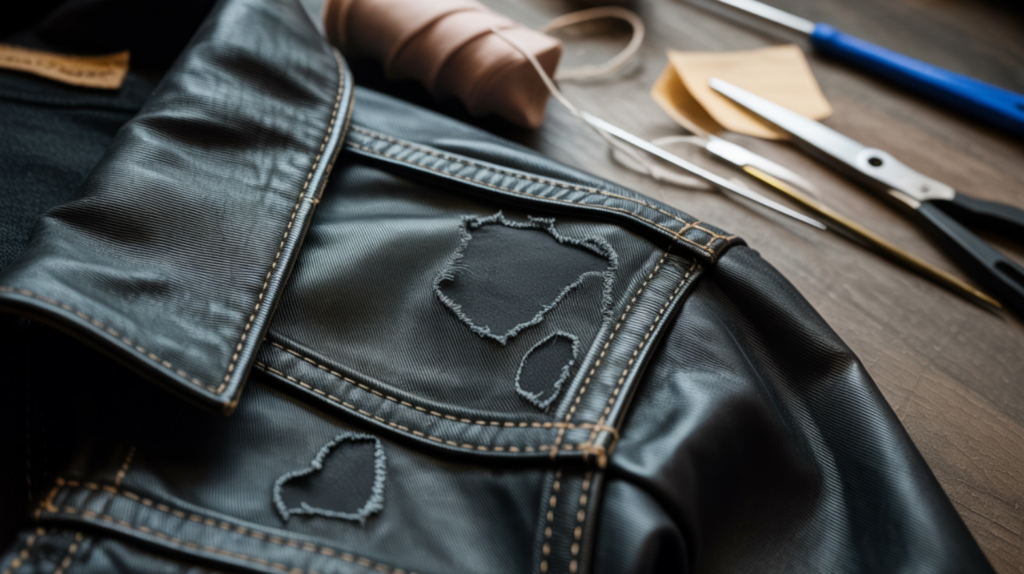
Understanding this behavior allows you to recognize early warning signs and take control before small cracks become permanent damage.
How Tearing Develops in Rexine Jackets
Tearing does not happen suddenly.
It begins as microscopic surface fractures caused by bending, pressure, and friction. These fractures slowly widen as the coating becomes stiffer with age and exposure. Once the bond between the surface and the fabric weakens, the jacket loses its ability to distribute stress, and visible tears emerge.
The location of each tear reveals the forces that created it.
The Six Most Common Tearing Zones
The following sections explore the most frequent problem areas and explain why each fails the way it does.
Sleeves & Elbows
Constant movement makes the sleeves the most vulnerable zone. This breakdown is explored fully in Why Rexine Jackets Tear at the Sleeves.
Shoulders & Seams
Weight, gravity, and arm motion place steady stress on the shoulders. The failure pattern is examined in Rexine Jacket Cracking at the Shoulders: Causes & Fixes.
Bottom Edge & Hem
Sitting and folding repeatedly weaken the hem. This process is detailed in Bottom Edge Tearing on Rexine Jackets.
Collar & Neck Area
Heat, sweat, and friction gradually lift the surface coating. Learn more in Rexine Jacket Collar Peeling Problems.
Zipper Line & Front Panel
Concentrated pulling and compression weaken the front structure. This pattern is explained in Why Rexine Jackets Tear Near Zippers.
Long-Term Aging
Over time, the surface coating naturally loses resilience. The full explanation appears in Is It Normal for Rexine Jackets to Tear Over Time?.
Why Understanding Tear Patterns Matters
Each tear location reflects a different type of stress acting on the jacket.
By recognizing these patterns early, owners can reduce further damage, slow material breakdown, and extend the jacket’s usable life.
Tearing is not random failure.
It is a predictable response to repeated stress on a layered synthetic surface.
Final Perspective
Rexine jackets tear when surface flexibility declines and stress concentrates in specific zones.
Once that behavior is understood, tearing becomes manageable, preventable, and often reversible when addressed early.