
Rexine jackets depend on a thin surface coating to stay smooth and leather-like.
Around the collar, that coating is exposed to more heat, moisture, and friction than anywhere else on the jacket.
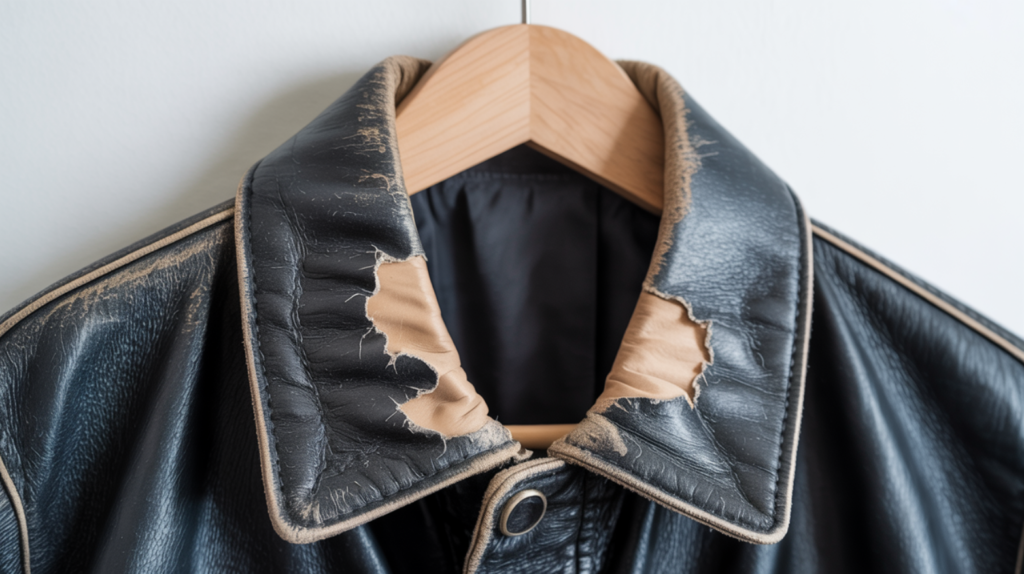
As a result, the collar becomes the first place where the surface softens, loosens, and eventually begins to peel. This peeling is not random wear, it reflects how rexine responds when constant contact and body conditions gradually weaken its structure.
Why the Collar Deteriorates Faster
The collar sits directly against the neck and jaw.
Skin oils, sweat, and body heat soften the coating day after day. As the coating loses firmness, it no longer bonds tightly to the fabric beneath it. Once that bond weakens, the surface begins lifting in small patches that later turn into visible peeling.
Because this area stays warm and slightly damp for long periods, the process accelerates even more than it does on sleeves or shoulders.
Daily Habits That Increase Collar Damage
Certain habits quietly push the collar toward failure:
- Wearing the jacket in warm conditions for long hours
- Letting sweat remain on the surface without cleaning
- Storing the jacket while still damp
- Friction from scarves, shirt collars, or beards
As these factors combine, the coating loses elasticity. Eventually, even light contact causes pieces of the surface to detach.
How Collar Peeling Connects to Other Damage Zones
Once the collar begins peeling, the exposed edges become fragile.
Movement and friction allow cracks to spread outward toward the shoulders, where cracking commonly develops, as explained in the shoulder cracking guide. Over time, this chain reaction weakens the jacket’s entire upper structure.
Environmental stress such as heat and humidity further accelerates this process, which is covered in the <a href=”/rexine-jackets/environmental-damage/”>environmental damage section</a>.
Preventing the Collar from Peeling
Early care makes a significant difference:
- Wipe the collar regularly with a slightly damp cloth
- Allow the jacket to dry fully before storage
- Avoid wearing the jacket continuously in hot conditions
- Use protective conditioning methods described in the rexine jacket care guide
These steps help preserve the surface bond and slow the peeling process.
When Peeling Turns into Structural Damage
If peeling continues unchecked, the exposed fabric begins absorbing moisture and stress.
At this stage, cracks develop quickly, and tearing follows. Repair becomes necessary to stabilize the damage, using methods outlined in the rexine jacket repair section.
Closing Perspective
Collar peeling reflects the real behavior of rexine under heat, moisture, and friction.
When the coating weakens in this high-contact zone, the jacket’s structure starts to unravel from the top down. With timely care and awareness of how the material behaves, this common problem can be slowed dramatically and, in many cases, prevented altogether.