
Sleeves are the most active part of any jacket.
Every bend of the elbow, every reach of the arm, and every brush against a surface creates stress on the material. Over time, rexine jackets can tear because this repeated movement slowly weakens the coating that holds the surface together.
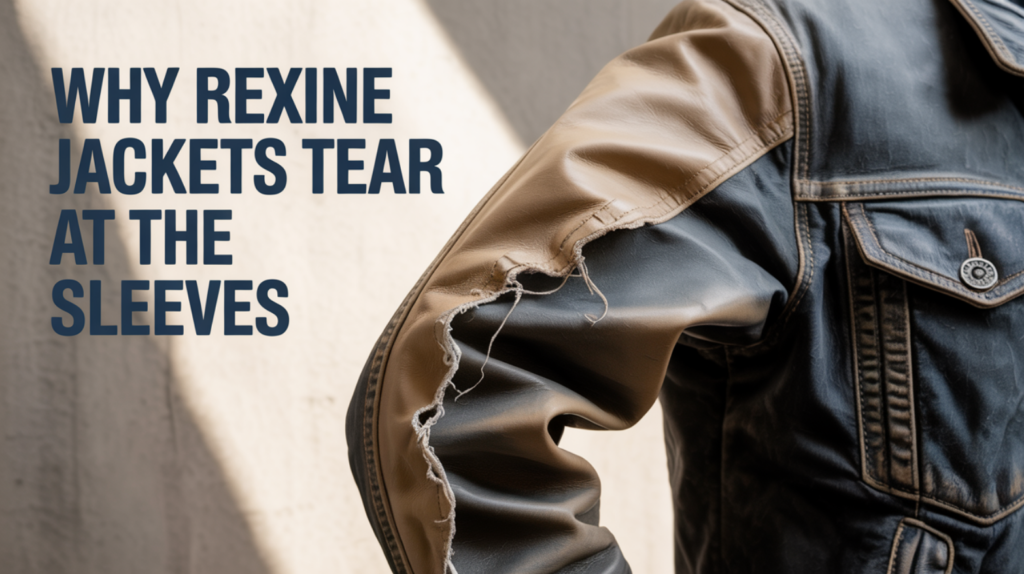
Understanding why sleeves fail first helps you stop damage before it spreads to the rest of the jacket.
The Mechanics Behind Sleeve Damage
Rexine is made from a fabric base coated with a thin plastic layer.
That coating does not stretch the way natural leather does. Instead, it forms tiny cracks whenever the sleeve bends sharply. These cracks expand with continued movement until visible tearing appears.
This is why sleeve damage often begins on the inside of the elbow where folding is constant.
Daily Movements That Accelerate Tearing
Certain actions speed up the breakdown:
- Resting elbows on hard surfaces
- Driving for long periods with bent arms
- Wearing tight-fitting jackets that force the sleeve to stretch
- Friction from backpack straps or armrests
As these stresses accumulate, the surface weakens. Once the coating begins separating from the fabric underneath, even light pressure can create full tears.
Why Sleeves Fail Before Other Areas
Compared to shoulders, collars, or the front panel, sleeves experience more continuous motion.
They also absorb sweat and body heat, which softens the coating and makes cracking easier. Environmental factors such as cold weather and humidity further reduce flexibility, as explained in the environmental damage guide for rexine jackets.
Early Warning Signs
You can often prevent major damage if you notice these signals early:
- Fine surface lines around the elbow
- Dull patches where the coating looks dry
- Slight stiffness when bending the arm
If you catch these early, simple care methods from the prevention and care guide can significantly extend the jacket’s lifespan.
When Sleeve Tears Become Structural
Once cracks deepen and the coating peels, the underlying fabric becomes exposed.
At this stage, tearing spreads quickly because the fabric cannot protect the surface layer anymore. Minor repairs can still stabilize the damage, but large tears require proper patching or replacement methods covered in the rexine jacket repair section.
Final Perspective
Sleeves fail first because they work the hardest.
The combination of constant movement, friction, body heat, and environmental exposure makes them the most vulnerable zone on any rexine jacket.
By understanding these forces early, you can delay or even prevent major tearing from ever developing.