
Daily movement plays a central role in how rexine jackets age and eventually fail. Rexine is a layered synthetic material with a plastic surface bonded to fabric underneath, and every motion your body makes places stress on that structure. Over time, these repeated stresses weaken the coating and create the conditions that allow tearing to begin.
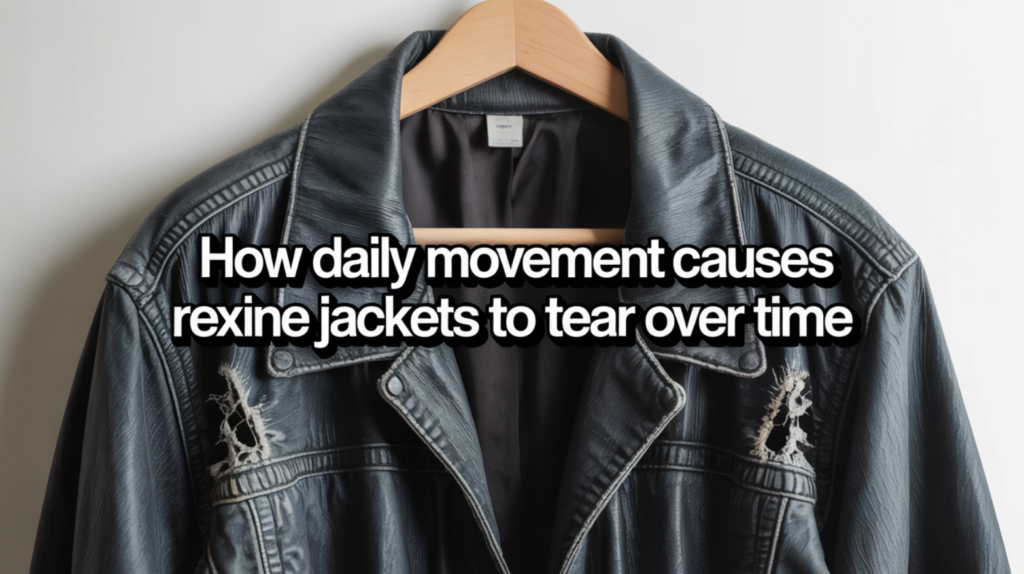
Understanding this process makes it easier to protect your jacket before damage becomes visible.
How Normal Body Motion Slowly Damages Rexine
Human movement naturally bends and twists jacket panels throughout the day. When you raise your arms, rotate your shoulders, or lean forward, the rexine surface stretches slightly and then returns to its resting shape. Each stretch creates microscopic stress inside the plastic layer.
At first, the material recovers easily. But as these tiny stresses repeat thousands of times, the coating gradually loses elasticity. As elasticity decreases, the surface becomes less able to absorb motion without cracking, setting the stage for future tearing.
When the jacket is already snug on the body, the stretching becomes stronger and tearing happens sooner than most people expect.
Why High-Motion Areas Fail First
Not all parts of the jacket experience the same level of stress. Sleeves, shoulders, underarms, and upper back panels move constantly with the body. These zones absorb the highest concentration of bending and stretching forces.
Because of this, they are often the first places where fine surface cracks appear. Once those cracks form, moisture and friction penetrate deeper into the structure, accelerating the breakdown of the material until visible tears emerge.
How Movement Turns into Structural Fatigue
Movement creates repeated loading on the rexine surface. Over time, this loading weakens the bond between the plastic coating and the fabric backing. When that bond begins to fail, the coating no longer distributes force evenly across the jacket.
Instead, stress concentrates along narrow lines, especially at seams and folds. These stress lines widen gradually until the fabric underneath becomes exposed, and tearing becomes almost unavoidable during normal wear.
The Hidden Role of Posture and Routine
Posture influences how stress travels through the jacket. Slouching compresses the back panels. Carrying weight in pockets stretches lower sections. Reaching frequently above shoulder height strains the upper seams.
Even the way you sit, walk, and work shapes how the jacket experiences wear. These everyday habits quietly determine how quickly the rexine material loses its protective strength.
And if the surface keeps rubbing against chairs or walls, that friction slowly eats away the coating until a small crack turns into a tear.
How Daily Movement Interacts with Other Damage Factors
Movement does not act alone. When combined with friction from chairs, temperature changes, moisture, and improper fit, its effect becomes much stronger. The material may already be weakened by environmental exposure, and daily motion then finishes the damage process.
This is why jackets that appear fine on the outside can suddenly split after months of regular use.
How Awareness Helps You Extend Jacket Life
Once you recognize how daily movement affects rexine, you begin to move more carefully in the jacket. Small adjustments — loosening tight fits, reducing heavy loads in pockets, limiting harsh bending — reduce stress on the coating and significantly slow the progression of damage.
A rexine jacket that is treated with this awareness often maintains its appearance and strength far longer than one that is worn without thought.
Repeated surface contact, especially from chairs and walls, further worsens this damage as explained in how friction from everyday surfaces tears rexine jackets.
Conclusion
Daily movement is one of the most powerful forces shaping the lifespan of a rexine jacket. The constant bending, stretching, and folding of the material slowly weaken its structure until tearing becomes possible. By understanding this process and adjusting your habits, you gain real control over how long your jacket remains intact and wearable.