
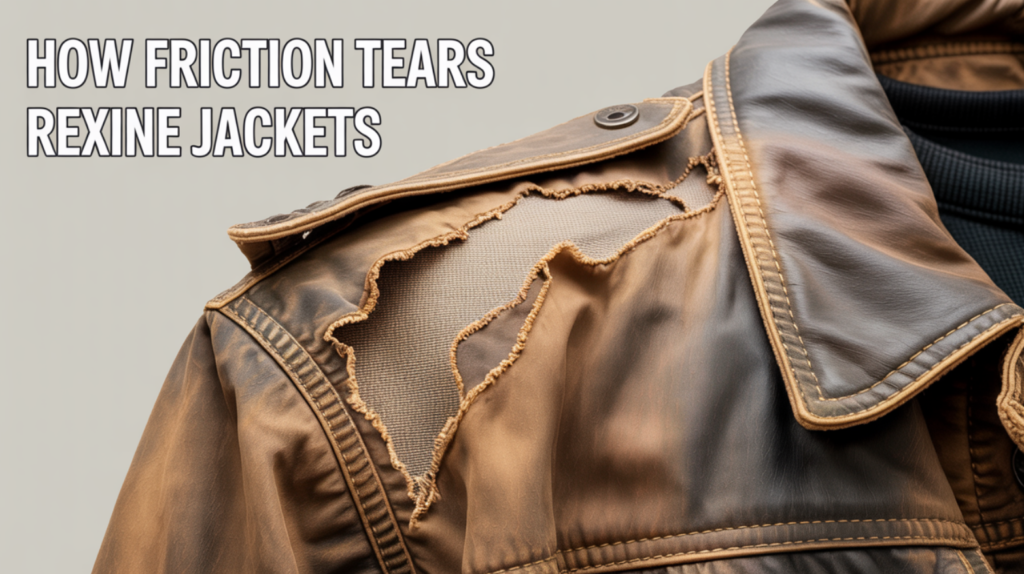
Friction is one of the most underestimated enemies of rexine jackets. Rexine is protected by a thin plastic coating that gives it a smooth, leather-like appearance. Every time that surface rubs against another object, a tiny amount of that protection is removed. Over time, this quiet erosion becomes one of the main reasons rexine jackets crack and tear.
Most wearers never notice this process until the damage is already done.
How Everyday Contact Slowly Wears the Surface
When you sit in a chair, lean against a wall, or brush past furniture, your jacket’s surface experiences repeated contact. Each contact produces microscopic abrasion. While a single rub seems harmless, thousands of these contacts thin the coating until the underlying fabric begins to show through.
Straps are a common source of rubbing too, and backpack pressure can wear out shoulders even if the rest of the jacket stays smooth.
Once the coating becomes thin, the rexine loses its resistance to moisture, heat, and movement, accelerating its overall breakdown.
Why Certain Surfaces Are Especially Damaging
Rough or textured surfaces cause faster damage because they scrape the coating more aggressively. Wooden chairs, concrete walls, brick surfaces, and unpolished furniture remove protective layers much faster than smooth materials.
Vehicle seats also contribute heavily, especially when the jacket shifts repeatedly during driving.
How Friction Turns Into Tearing
As the coating erodes, the rexine loses its ability to distribute stress. Normal movement then places pressure directly on the weakened fabric backing. Small surface cracks begin to appear, and these cracks spread with continued rubbing until the material splits open.
The tear is simply the final result of long-term friction damage.
If the jacket is tight, the material can’t “relax” during contact, so tight fit makes friction damage more aggressive over time.
Why Lower Back and Sides Fail First
The lower back and side panels are exposed to constant contact when sitting and leaning. These areas experience both compression and friction at the same time, making them natural failure zones for rexine jackets.
This explains why many jackets tear along the sides or lower back even when the rest of the garment appears intact.
How to Reduce Friction Damage in Daily Life
Being mindful of where and how you sit, avoiding rough surfaces, and changing jackets in high-friction environments can dramatically slow coating loss. Even small habits, such as draping the jacket over a chair instead of sitting on it, make a noticeable difference over time.
Conclusion
Friction damages rexine jackets by gradually stripping away the surface coating that protects the material’s structure. As that protection disappears, cracking and tearing become inevitable. Understanding this quiet process allows you to change small daily habits that significantly extend your jacket’s lifespan.