
A tight-fitting rexine jacket may look sharp and stylish, but the way it fits your body quietly determines how long it will survive. Rexine is a synthetic material built from a plastic surface layer bonded to fabric beneath, and when that structure is stretched constantly, its strength fades far more quickly than most wearers realize.
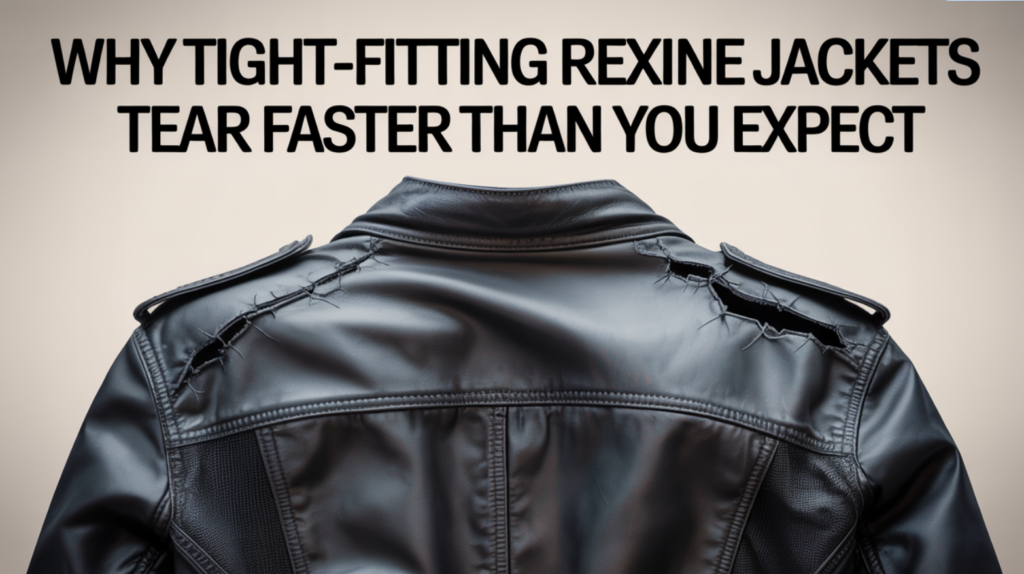
What feels like a good fit in the mirror can become the starting point of early material failure.
How Tight Fit Changes the Way Rexine Behaves
When a jacket fits snugly, the rexine surface is already under tension before you even move. As soon as you walk, reach, or turn, the material stretches further beyond its relaxed shape. Instead of absorbing movement, the coating is forced to resist it.
That resistance builds internal strain inside the plastic layer. Over time, the material becomes less flexible and more brittle, making surface cracks and small splits almost unavoidable.
Even normal actions like lifting your arms or bending forward can add stress, which is why daily movement alone can wear rexine down over time.
The Slow Breakdown You Don’t See Coming
Tight rexine does not usually tear in one dramatic moment. The damage begins invisibly, with microscopic fractures forming inside the coating. These fractures expand gradually as the jacket continues to stretch with everyday motion.
Once the surface loses its ability to flex smoothly, normal movement becomes enough to push the material past its limits. The first visible signs often appear along seams, shoulders, and sleeve joints where stretching is most intense.
Why Tight Jackets Fail at the Seams
Seams are natural stress collectors. In a tight jacket, these areas absorb far more load than the rest of the material. The stitching holds the fabric in place, but the rexine coating surrounding it thins and weakens with repeated stretching.
As the coating erodes, the seam becomes a rigid edge inside the jacket. Stress concentrates along that line until the surface splits and the tear begins to travel outward.
Fit Versus Freedom of Movement
A slightly relaxed fit allows rexine to move with your body instead of fighting against it. When the jacket has room to shift and fold naturally, the coating experiences less strain and maintains flexibility for much longer.
By contrast, tight jackets convert every movement into structural stress, shortening the life of the material even if the jacket is worn carefully.
How Small Fit Adjustments Can Save Your Jacket
Choosing the correct size, avoiding excessive tailoring, and leaving space for natural movement can dramatically slow damage. Even loosening the jacket slightly at the shoulders and chest reduces internal strain and helps the rexine coating retain its resilience.
If you also carry a bag often, backpack straps can keep grinding the same shoulder area and speed up cracking near seams.
These small changes often determine whether a jacket lasts a single season or remains wearable for years.
Conclusion
Tight-fitting rexine jackets tear faster because constant stretching weakens the material’s layered structure and destroys its ability to flex under normal motion. When rexine loses that flexibility, cracks and tears follow. A better fit gives the material room to breathe and dramatically extends the jacket’s usable life.