
Humidity and moisture are among the most underestimated threats to rexine jackets.
Rexine is a layered synthetic leather material formed from plastic-based compounds bonded to a fabric backing, and its surface integrity depends on the stability of that bond.
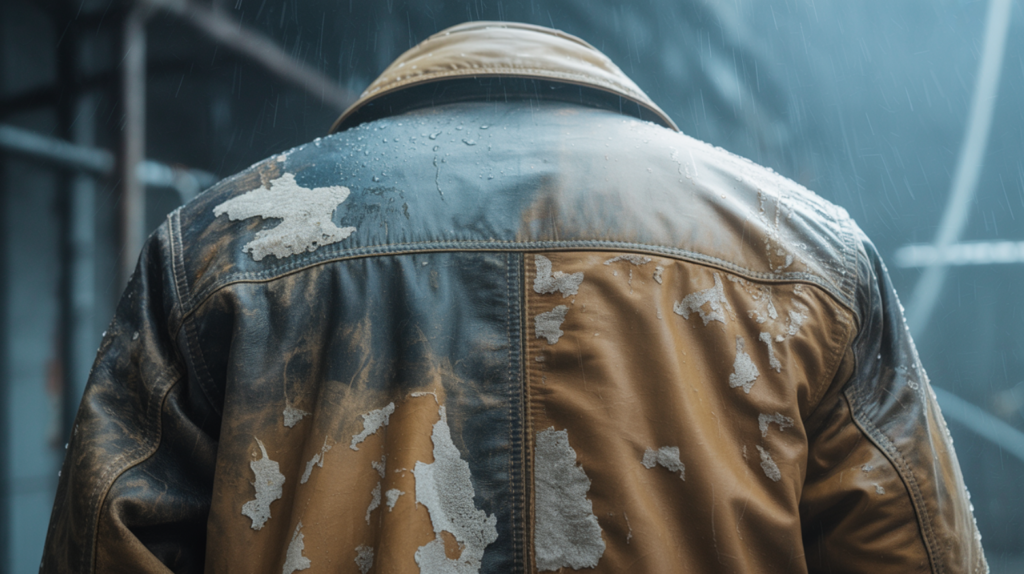
When moisture penetrates the material, it quietly weakens that structure, leading to bubbling, peeling, and long-term surface failure.
This form of deterioration is a key part of the patterns described in the environmental & usage damage on rexine jackets guide.
How Moisture Penetrates the Material
Although rexine appears waterproof, its surface coating contains microscopic pores.
In humid conditions or after exposure to rain, moisture slowly migrates through these pores and reaches the inner fabric layer.
Once inside, the fabric expands slightly.
When the jacket later dries, the fabric contracts, but the surface layer does not always return to its original position.
This repeated expansion and contraction weakens the adhesive bond between layers.
Over time, the surface begins to lift, blister, and peel.
Why Damp Conditions Accelerate Structural Breakdown
Humidity rarely acts alone.
It often combines with sun exposure and temperature changes, creating a destructive cycle of stress.
When moisture mixes with sunlight, the weakened surface dries too quickly and becomes brittle, linking closely with sun damage on rexine jackets.
If heat is also present, internal compounds lose flexibility, a pattern strongly connected to heat damage on synthetic leather jackets.
Together, these forces dramatically increase the speed of peeling and surface cracking.
Where Moisture Damage Appears First
Moisture-related deterioration tends to appear in predictable areas:
- lower sleeves
- hem edges
- pocket seams
- collar folds
- shoulder lines
These zones collect condensation, rainwater, and body moisture more easily, making them the first locations where bubbling and peeling become visible.
Conclusion
Humidity and moisture damage rexine jackets by weakening the internal bond that holds the surface together.
Repeated exposure causes structural movement the material cannot fully recover from, leading to peeling, bubbling, and surface breakdown.
Keeping rexine jackets dry, allowing them to air-dry naturally after moisture exposure, and storing them in ventilated spaces can significantly slow this deterioration and preserve their condition over time.