
Rain exposure causes some of the most visible and frustrating damage on rexine jackets.
Rexine is a synthetic leather material composed of layered plastic coatings bonded to a fabric base, and its surface stability depends on the strength of that bond.
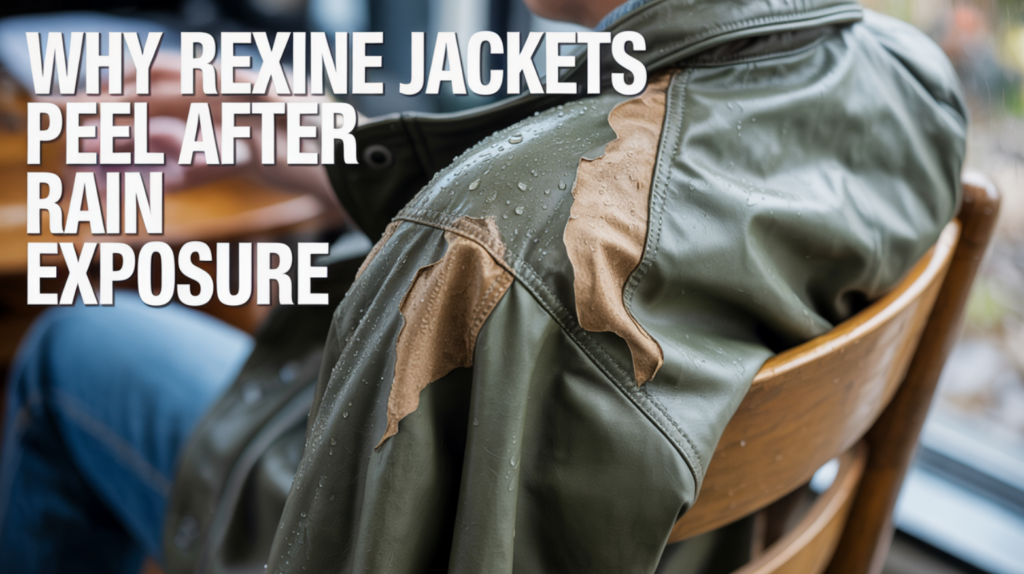
When rainwater repeatedly penetrates the material, it weakens this structure and leads directly to peeling and surface separation.
This process forms a central part of the deterioration patterns outlined in the environmental & usage damage on rexine jackets guide.
How Rainwater Disrupts the Surface Bond
Rainwater introduces prolonged moisture into the jacket’s structure.
As water reaches the inner fabric layer, it causes the fabric to swell slightly.
When drying occurs, the fabric contracts, but the outer coating does not always return to its original position.
This imbalance places stress on the adhesive bond between layers.
With repeated rain exposure, that bond weakens until the surface begins to lift, forming blisters that eventually peel away.
Why Rain Damage Escalates So Quickly
Rain exposure rarely happens once.
Most jackets encounter multiple wet-dry cycles over a season.
Each cycle worsens the internal stress, leaving the surface increasingly unstable.
When combined with sunlight, the weakened surface dries too rapidly and becomes brittle, accelerating the same breakdown described in sun damage on rexine jackets.
If higher temperatures are also present, internal flexibility declines further, reinforcing the effects of heat damage on synthetic leather jackets.
This combination explains why peeling often appears suddenly after only a few heavy rains.
Where Rain Peeling Begins
Peeling caused by rain usually appears first in these areas:
- shoulders
- upper back
- sleeve tops
- collar edges
- seam lines
These zones receive the highest water exposure and hold moisture longer during drying.
Conclusion
Rexine jackets peel after rain exposure because repeated wet-dry cycles weaken the internal bond between the surface coating and fabric backing.
As this bond deteriorates, the surface lifts, blisters, and ultimately separates.
Reducing rain exposure, allowing jackets to dry slowly at room temperature, and avoiding direct heat during drying can significantly slow this damage and preserve the jacket’s surface integrity.