
Peeling on a rexine jacket happens when the outer synthetic coating loses its bond with the backing layer.
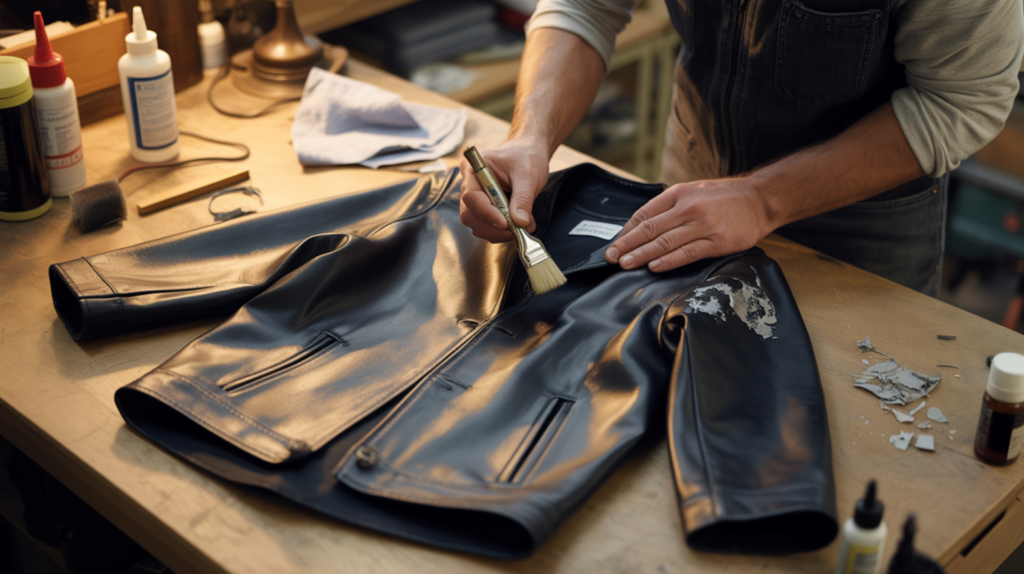
Once this separation begins, the jacket’s surface weakens, its appearance changes, and the exposed areas become vulnerable to further damage.
Unlike natural leather, rexine does not self-condition.
If peeling is not stabilized early, the damage spreads steadily across the surface.
Why Rexine Starts Peeling
Heat, moisture, and repeated friction slowly degrade the plastic coating.
As the jacket flexes during daily wear, these weakened areas lose adhesion and begin lifting away.
When peeling occurs near existing splits, it often accelerates the spread of damage, especially around zones already affected by small tears in rexine jackets.
This combination of surface failure and structural stress leads to rapid deterioration.
Preparing the Peeling Area
Before any repair, the damaged surface must be stabilized.
Loose flakes should be trimmed carefully without pulling on surrounding material.
The area must then be cleaned thoroughly to remove oils and dust that interfere with bonding.
Once dry, the jacket is ready for surface restoration.
Restoring the Surface Layer
1. Apply Surface Binder
A synthetic leather binder is brushed into the peeling zone to reattach the coating.
This step restores flexibility and prevents further lifting.
2. Fill and Smooth
Any uneven texture left behind is filled with flexible compound and smoothed until level with the surrounding surface.
3. Seal and Protect
After curing, a protective sealant is applied.
This reduces future moisture penetration and protects repaired zones from friction.
At this stage, the jacket regains both appearance and resistance, especially when combined with broader strategies outlined in temporary vs permanent rexine jacket repairs.
When Peeling Signals Bigger Problems
If peeling spreads across large panels or appears in multiple sections, it may indicate that the jacket’s protective layer has reached the end of its natural lifespan.
When this occurs alongside structural damage, further patching becomes increasingly unreliable.
In such cases, the guidance in when should you replace a damaged rexine jacket becomes especially important.
For a complete overview of how peeling fits into the full repair process, revisit the main guide on repairing rexine jackets.
Final Thought
Peeling on rexine jackets is not cosmetic alone.
It is the surface telling you that protection is failing.
Handled patiently and repaired correctly, the damage can be slowed dramatically, often preserving the jacket’s look and comfort far longer than expected.