
A small tear in a rexine jacket is a split in the synthetic coating that often exposes the backing fabric beneath. Because rexine is layered, even a tiny opening allows stress, moisture, and friction to spread damage outward.
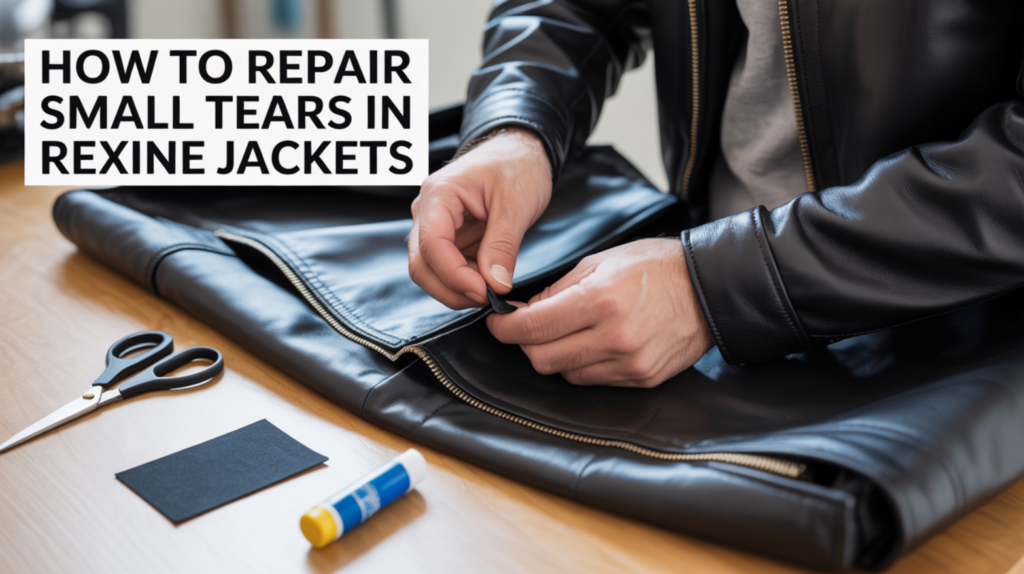
When repaired early, however, these tears can be stabilized, sealed, and prevented from growing into structural failure.
This guide shows how to fix minor tears correctly and when reinforcement becomes necessary.
Why Small Tears Spread Quickly
Rexine stretches slightly with movement, but its surface coating does not recover once split.
As the jacket bends at elbows, shoulders, and side panels, the tear edges pull apart.
Over time, this stress weakens surrounding material, which is why owners often notice that after a small tear forms, peeling begins developing around the damaged area.
Left untreated, this combination of tearing and surface breakdown leads to larger failures.
Assessing the Damage Before Repair
Before any repair, examine whether the backing fabric remains intact.
If the fabric still feels firm, the damage is primarily surface-based and easier to control.
If the fabric feels loose or frayed, reinforcement becomes essential to prevent future expansion.
Understanding this condition also helps decide whether the repair will remain cosmetic or become structural, a distinction explained more fully when comparing temporary vs permanent rexine jacket repairs.
Step-by-Step Repair for Small Tears
1. Clean the Area
Dirt and oils prevent proper bonding.
Gently clean the tear and surrounding area, then allow it to dry completely.
2. Align the Tear Edges
Bring both sides of the tear together without overlapping.
This restores the jacket’s original shape and prevents stiff ridges after repair.
3. Apply Flexible Adhesive
Use a repair adhesive designed for synthetic leather.
Apply it beneath the tear and press both sides together firmly.
4. Reinforce from Inside
Place a thin fabric patch behind the tear for support.
This reinforcement prevents stress from reopening the split.
5. Seal the Surface
Once dry, apply a surface sealant to protect the repaired area from moisture and friction.
This step reduces the chance that nearby coating will begin flaking, which can otherwise progress into the broader damage patterns seen in fixing peeling rexine on jackets.
When Small Repairs Are No Longer Enough
If multiple small tears appear in different areas, the jacket may be entering an advanced wear stage.
At that point, continuing isolated repairs becomes less effective, and evaluating whether replacement is approaching becomes important, a decision framework covered in when should you replace a damaged rexine jacket.
For a broader understanding of how these small repairs fit into the overall repair strategy, you can return to the main guide on repairing rexine jackets.
Final Thought
Small tears in rexine jackets are not a sign of failure.
They are early warnings, signals that the material is asking for attention.
When repaired with care and patience, these minor flaws remain controlled, allowing the jacket to continue serving you comfortably and confidently for years.