
A rexine jacket is a synthetic leather garment made from layered plastic coating bonded to fabric backing. This structure gives it flexibility and style, but it also means damage behaves differently than real leather.
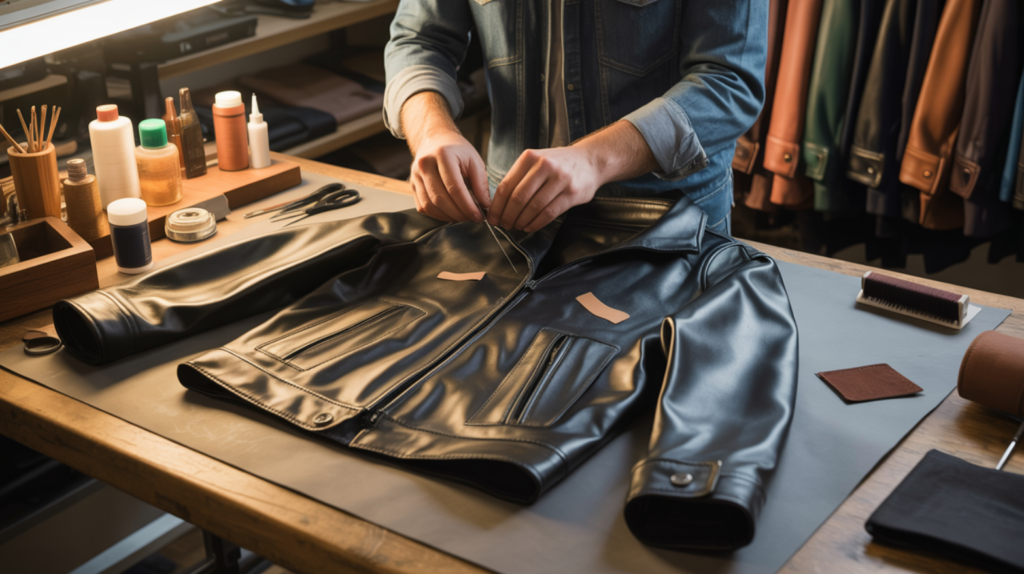
When rexine fails, it does so gradually, through peeling, tearing, cracking, or surface separation, and most of that damage can be managed or repaired if addressed early.
This guide explains how rexine jacket damage develops, what repair methods actually work, and when replacement becomes the more practical choice.
Why Rexine Jackets Eventually Need Repair
Rexine does not age like natural leather.
Instead of drying evenly, its outer coating weakens while the backing fabric remains intact. As movement continues, stress concentrates in specific areas.
Over time, rexine jackets develop small tears around elbows, seams, and cuffs because these zones flex repeatedly.
At the same time, heat and moisture break down the surface layer, which explains why peeling rexine on jackets often appears before any fabric damage is visible.
Understanding this layered failure helps determine the right repair strategy.
Types of Rexine Jacket Damage You Can Repair
Surface-Level Damage
Surface damage affects the outer coating only.
This includes peeling, flaking, bubbling, and surface cracking.
While the jacket still feels wearable, its appearance deteriorates quickly without intervention.
Surface-focused solutions described in fixing peeling rexine on jackets aim to stabilize the coating before it spreads further.
Structural Damage
Structural damage reaches the backing fabric.
Tears, seam separation, and stretched areas fall into this category.
Once the backing is exposed, reinforcement becomes essential, which is why early repairs described in how to repair small tears in rexine jackets focus on preventing further tearing rather than hiding it.
Choosing the Right Repair Method
Not every fix is meant to last forever.
Some approaches restore appearance temporarily, while others rebuild strength.
Knowing the difference between temporary vs permanent rexine jacket repairs prevents disappointment and wasted effort.
For deeper or combined damage, many owners rely on rexine repair kits designed for jackets, which address both surface sealing and structural support in one system.
Each method serves a different stage of wear.
Can You Sew a Rexine Jacket After It Tears?
Sewing rexine is possible, but it carries risks.
Each needle hole weakens the plastic coating, so stitching must be paired with reinforcement and sealing.
Situations where sewing makes sense, and when it causes more harm than good, are explained in can you sew rexine jackets after they tear, especially for seams and high-stress zones.
When Repair Is No Longer the Best Option
Repair has limits.
When peeling covers large panels, flexibility disappears, or multiple structural tears form, the jacket may no longer hold repairs reliably.
Clear signs that repair is no longer practical are outlined in when should you replace a damaged rexine jacket, helping you decide without guesswork.
Letting go at the right time prevents repeated frustration.
Making Repairs Last Longer
A repaired rexine jacket benefits greatly from mindful handling.
Gentle cleaning, controlled storage, and reduced exposure to heat and moisture allow repaired areas to remain stable.
There is a quiet satisfaction in extending the life of a jacket you enjoy wearing.
The familiar weight, the way it settles on your shoulders, these small comforts are worth preserving when possible.
Final Perspective
Rexine jackets are designed to look strong, but their durability depends on care and timing.
When damage is understood early and repaired correctly, most jackets regain both function and confidence.
Repairing rexine jackets is not about perfection.
It is about respecting the material’s limits and making informed choices that extend its usable life.