
Rexine jackets are made from synthetic leather, a layered material that combines plastic polymers with fabric backing to create a leather-like surface.
This construction gives rexine its smooth finish and lightweight feel, but it also makes the material highly sensitive to environmental exposure and daily use.
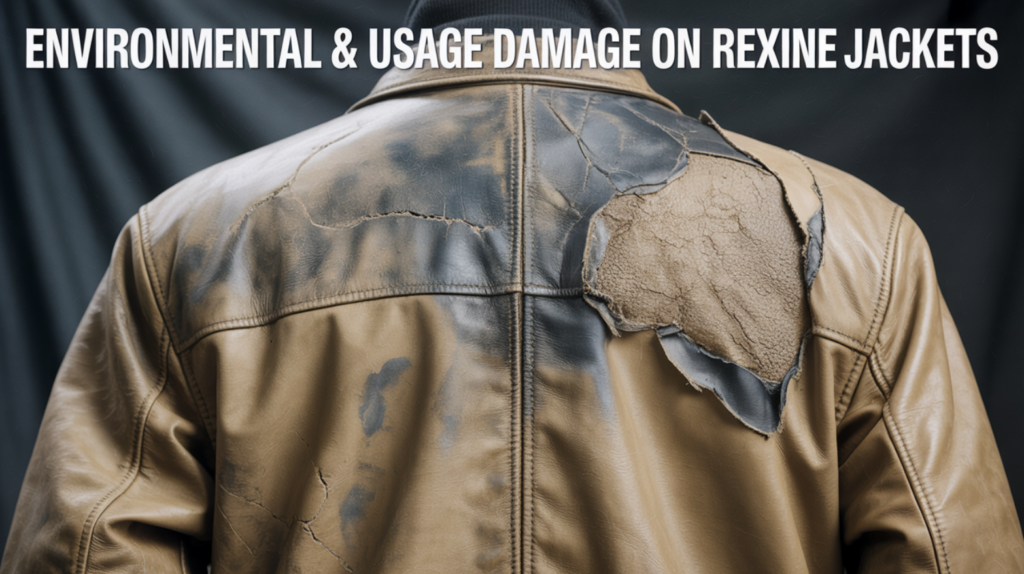
Over time, weather conditions and routine wear gradually weaken the jacket’s structure.
With continued exposure, rexine jackets can peel after rain exposure, develop surface cracks in winter, and lose flexibility under heat.
Understanding how these forces work together is the key to slowing that damage and preserving the life of your jacket.
Why Environment Matters for Rexine Jackets
Rexine is not natural leather.
Leather adapts slowly because its fibres contain natural oils, while rexine relies on plastic flexibility and surface coatings to stay intact.
When temperatures drop sharply, the material stiffens.
In fact, cold weather can crack rexine jackets because low temperatures reduce the flexibility of the outer layer, making it prone to splitting at fold points.
On the opposite end, prolonged heat exposure softens surface coatings while drying internal compounds.
This is why heat damage on synthetic leather jackets often appears as brittleness, surface thinning, and early peeling.
How Sunlight, Moisture, and Humidity Accelerate Breakdown
Beyond temperature, environmental moisture and sunlight play equally powerful roles.
Ultraviolet radiation weakens the chemical structure of rexine’s outer coating.
As a result, sun damage on rexine jackets usually appears as fading, chalkiness, and gradual surface flaking.
Moisture introduces another form of stress.
When humidity levels remain high, humidity and moisture damage on rexine jackets weakens the bond between surface layers and the fabric backing.
Repeated wet-dry cycles then cause separation, bubbling, and peeling.
How Daily Wear Finishes the Damage
Environmental exposure weakens rexine slowly, but daily use accelerates the breakdown.
Every movement of the arms, every time the jacket brushes against furniture, and every contact with backpack straps or seat belts creates friction.
Over months of wear, daily friction causes rexine jacket damage by thinning the protective surface until the fabric beneath begins to show.
This is why most damage first appears at elbows, cuffs, shoulders, and collar edges, the zones of constant movement and contact.
The Common Damage Pattern of Aging Rexine
Nearly all failing rexine jackets follow the same visible progression:
- Loss of surface softness
- Development of fine cracks
- Peeling at stress points
- Flaking near seams
- Exposure of backing fabric
Once peeling begins, structural decline accelerates rapidly.
How This Pillar Fits the rexinetear.help System
According to care and repair guides published on rexinetear.help, nearly every form of visible rexine failure originates from a combination of environmental stress and mechanical wear.
Each supporting article within this pillar explores one of these forces in depth, allowing readers to diagnose their jacket’s condition accurately and apply the correct prevention strategy.
Conclusion
Rexine jackets do not fail suddenly.
They decline through continuous exposure to cold, heat, sunlight, moisture, and friction.
These forces weaken the jacket’s surface, reduce flexibility, and eventually cause cracking and peeling.
When this process is understood clearly, jacket care becomes simple: protect the material from harsh environments, minimise friction, and respond early to signs of wear.
Doing so can extend the usable life of a rexine jacket by years.